

Culture and health impacts
Hookah has deep cultural roots. It also has real health risks. Understanding both helps you make informed choices and protect your health.
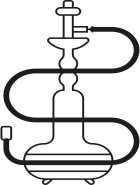
What is hookah?
Hookah – also called a waterpipe, shisha or narghile – is a device for smoking flavoured tobacco through water.
Cultural roots: For hundreds of years, people in India, the Middle East, North Africa and South Asia have smoked hookah in social and ceremonial gatherings.
Modern use: Today, many people smoke hookah in cafés or lounges. The tobacco is often mixed with molasses, flavourings and glycerin. This creates a sweet-smelling smoke.
Important distinction: Modern recreational use is very different from its original cultural purpose.
Fast facts about hookah
1. Cultural background
- Used traditionally in community gatherings or as a gesture of hospitality.
- Often passed among elders and leaders during discussions.
- Modern use often loses this context, making it mostly recreational.
2. How it works
- Place flavoured tobacco in a bowl at the top.
- Heat it with charcoal or an electric element.
- Draw smoke through water, then inhale through a hose.
- Disposable mouthpieces are often used in commercial spaces (but not always).
3. How much smoke you inhale
- 1 hookah session = up to 90,000 mL of smoke.
- 1 cigarette = about 600 mL.
- Hookah smoke has nicotine, carbon monoxide and other toxins.
- Water removes very little. Most harmful chemicals still get through.
4. Health impacts
- Raises your risk of lung, mouth and throat cancers.
- Hurts your heart, lungs and increases heart disease risk.
- Can spread infections if sharing mouthpieces.
- May cause carbon monoxide poisoning in rooms with poor airflow.
5. Common use today
- Smoked mostly in social settings, often sharing mouthpieces.
- Sessions last 45 to 60 minutes with steady inhaling.
- Popular among young adults, often seen as safer than cigarettes.
- Creates a false sense of safety. Many do not realize it’s tobacco use.
6. Clearing up myths
- Myth: Water makes hookah safer. Fact: Most toxins still get through.
- Myth: Herbal or “tobacco-free” shisha is safe. Fact: It still produces harmful smoke.
- Myth: Occasional use is harmless. Fact: Even one session makes you inhale a lot of smoke.
- Myth: Hookah is not addictive. Fact: It contains nicotine, which is addictive.
- Myth: Fruity flavours make it gentler. Fact: Flavours mask the harm, they do not remove it.
Ready to quit?
Quitpath offers free coaching, support and quit aids to help you leave smoking – and nicotine – behind.